

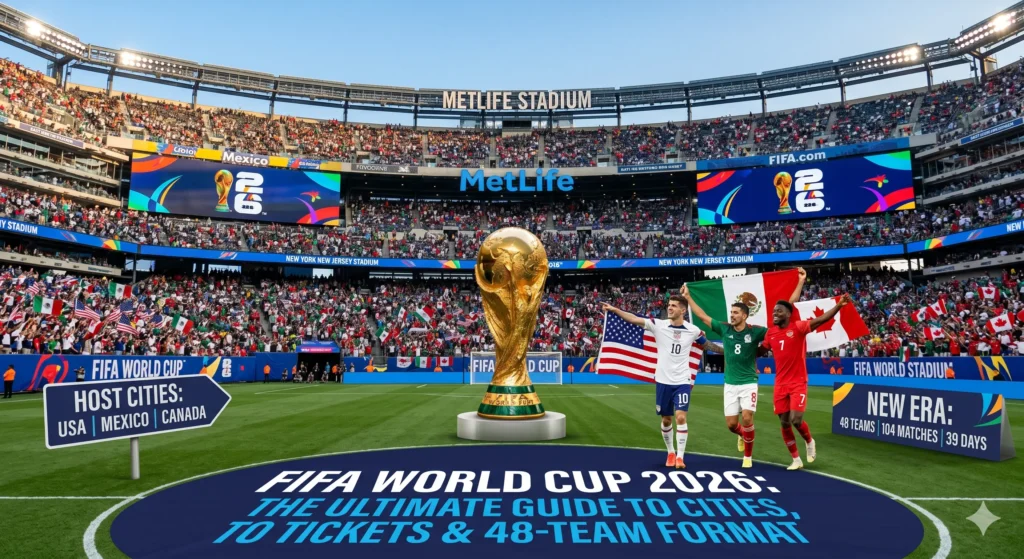
The world of football is on the brink of its most significant transformation yet. As the countdown to June 11, 2026, begins, the FIFA World Cup 2026—officially branded as FIFA World Cup 26™—is set to become the largest, most inclusive, and most technologically advanced sporting event in human history.
For the first time, three nations—the United States, Mexico, and Canada—will co-host the tournament. But the changes go far beyond geography. With a massive expansion to 48 teams and a record-breaking 104 matches, the 2026 edition is not just another World Cup; it is a global festival of football that will reshape the sport forever.
1. A Revolutionary Format: 48 Teams, 104 Matches
The most talked-about change for 2026 is the expansion of the field. Moving away from the 32-team format used since 1998, FIFA has opened the doors to 48 nations.
The Group Stage Overhaul
Instead of eight groups of four, we will now see 12 groups of four teams each. This structure ensures that every team plays at least three matches, maintaining the competitive integrity of the group stage while avoiding the “three-team group” controversies previously discussed.
- Who Advances? The top two teams from each group, along with the eight best third-placed teams, will advance to the knockout rounds.
- The Round of 32: For the first time, a new knockout stage has been added. The tournament will now feature a “Round of 32” before the traditional Round of 16.
- Duration: To accommodate the 104 matches (up from 64 in 2022), the tournament will span 39 days, ending with the grand final on July 19, 2026.
Why the Expansion Matters
This expansion is a major win for global inclusivity. Regions like Africa (CAF) and Asia (AFC) have seen their direct qualifying spots nearly double. This year, we are already seeing the excitement with debutants like Uzbekistan, Jordan, Curaçao, and Cape Verde ready to make their mark on the world stage.
2. Host Nations and the 16 Host Cities
Spanning across an entire continent, the 2026 World Cup will be played in 16 world-class stadiums. To reduce travel fatigue and environmental impact, FIFA has divided the host cities into three geographic regions: West, Central, and East.
The United States (11 Cities)
The U.S. will host the majority of the matches, including the knockout stages from the quarterfinals onward.
- New York/New Jersey (MetLife Stadium): The prestigious venue for the World Cup Final.
- Los Angeles (SoFi Stadium): Known for its cutting-edge design, it will host high-profile group stage matches.
- Dallas (AT&T Stadium): A marvel of engineering with a massive retractable roof.
- Other Cities: Atlanta, Boston, Houston, Kansas City, Miami, Philadelphia, San Francisco Bay Area, and Seattle.
Mexico (3 Cities)
Mexico becomes the first country to host the World Cup three times.
- Mexico City (Estadio Azteca): The historic “Cathedral of Football” will host the opening match on June 11, 2026, featuring the Mexican National Team.
- Guadalajara (Estadio Akron): A vibrant city with a deep-rooted football culture.
- Monterrey (Estadio BBVA): Home to one of the most picturesque stadium backdrops in the world.
Canada (2 Cities)
Canada makes history by hosting its first Men’s World Cup.
- Toronto (BMO Field): The heart of Canadian football will host Canada’s opening match.
- Vancouver (BC Place): A stunning renovated stadium on the West Coast.
3. Key Dates and Schedule Highlights
Planning your travel? Here are the dates you need to circle in your calendar:
- Opening Match: June 11, 2026, at the Estadio Azteca, Mexico City.
- Canada’s Opener: June 12, 2026, at BMO Field, Toronto.
- USA’s Opener: June 12, 2026, at SoFi Stadium, Los Angeles.
- Group Stage: June 11 – June 27.
- Round of 32: June 28 – July 3.
- Round of 16: July 4 – July 7.
- Quarterfinals: July 9 – July 11.
- Semifinals: July 14 – July 15.
- Final Match: July 19, 2026, at MetLife Stadium (New York/New Jersey).
4. Economic Impact: A $40 Billion Global Event
The 2026 World Cup isn’t just a sporting event; it’s a massive economic engine. Recent projections from the World Economic Forum suggest the tournament could contribute over $40 billion to global GDP.
Regional Gains
Host cities are expecting a tourism goldmine. For example, Los Angeles is projected to see an economic impact of nearly $600 million from its eight matches alone. Beyond direct visitor spending on hotels and dining, the tournament is expected to create over 800,000 full-time jobs worldwide in sectors like hospitality, security, and event management.
The “Legacy” Investment
The three host nations are investing over $2 billion in infrastructure, including stadium upgrades and improved public transit. These investments are designed to leave a lasting legacy, ensuring that these cities remain global destinations for sports and conventions for decades to come.
5. Fan Experience and Technology
FIFA is committed to making 2026 the most “fan-centric” World Cup ever.
- Rebranded Venues: In a move to protect sponsors and host city identity, stadiums will be temporarily rebranded. For instance, MetLife Stadium will be known as the “New York New Jersey Stadium.”
- Digital Integration: Expect a seamless digital experience, from mobile ticketing to AR-enhanced fan zones. FIFA’s goal is to engage a global audience of 5 billion people.
- Travel and Sustainability: To combat the distance between Vancouver and Mexico City, FIFA is clustering teams within specific regions during the group stage to minimize flying time and carbon footprints.
6. The Contenders: Who to Watch?
With the qualification rounds finalized and the groups set, the competition is fiercer than ever.
- The Defending Champions: Argentina, led by the legendary Lionel Messi, will look to defend their 2022 title in what may be Messi’s final curtain call.
- The Powerhouses: France, Brazil, and England remain the favorites with deep squads of young talent.
- The Underdogs: With 48 teams, watch out for “Giant Killers” from Africa and Asia who now have more opportunities than ever to reach the knockout rounds.
7. Conclusion: Why 2026 is Unmissable
The FIFA World Cup 2026 represents the pinnacle of human collaboration and athletic excellence. It is a tournament that bridges three nations and dozens of cultures. Whether you are a die-hard fan traveling to Atlanta or a casual viewer watching from London, 2026 promises a spectacle that exceeds the boundaries of the pitch.
Get ready—North America is about to become the center of the universe.
Frequently Asked Questions (FAQ)
Q: How can I buy tickets for the 2026 World Cup?
A: Tickets are sold exclusively through FIFA.com. Fans are encouraged to register their interest early to receive updates on sales phases and lottery dates.
Q: Will Lionel Messi play in the 2026 World Cup?
A: While not officially confirmed, Messi has stated he remains open to playing as long as he feels he can contribute at the highest level.
Q: Is the 2026 World Cup the first with 48 teams?
A: Yes, it is the first time in history the tournament has expanded from 32 to 48 teams.
Q: Where is the opening ceremony?
A: The opening ceremony and the first match will take place at the Estadio Azteca in Mexico City.
Disclaimer: This post is for informational and educational purposes only. We are an independent platform and are not affiliated with, authorized by, or endorsed by FIFA or the official World Cup 2026™ host organizations. All trademarks and official logos belong to their respective owners and are used here for news reporting and commentary under fair use. While we strive for accuracy, please consult official sources for final schedules and ticket information.
FIFA World Cup 2026 tickets
FIFA World Cup 2026 qualifiers
FIFA World Cup 2026 qualifiers table
FIFA World Cup 2026 final
FIFA World Cup 2026 groups
FIFA World Cup 2026 host country
FIFA World Cup 2026 matches
FIFA World Cup 2026: 48 teams list